
Dev Uthani Ekadashi is one of the most important Ekadashis in the Hindu calendar. On this sacred day, devotees believe Lord Vishnu awakens from his four-month cosmic sleep. As a result, the period of Chaturmas ends, and the season of auspicious beginnings starts again. In this guide, you will find the date, tithi timings, vrat rules, and spiritual meaning of Dev Uthani Ekadashi 2026.
Let’s Explore the Complete Essence of Dev Uthani Ekadashi 2026:-
What Is Dev Uthani Ekadashi?
Dev Uthani Ekadashi falls on the eleventh lunar day of the Shukla Paksha in the Hindu month of Kartik. Devotees also know it as Prabodhini Ekadashi, Devutthana Ekadashi, and Kartiki Ekadashi. Although the names vary across regions, the meaning stays the same. The word “Uthani” means “to rise,” so the festival celebrates the awakening of the Lord.
According to tradition, Lord Vishnu goes into Yog Nidra on Devshayani Ekadashi. He then rests through the four months of Chaturmas. On Dev Uthani Ekadashi, he wakes up and resumes his role as the Preserver of the universe. Therefore, devotees welcome him with prayers, lamps, devotional songs, and fasting.
Dev Uthani Ekadashi 2026 Date and Tithi Timings
In 2026, the Ekadashi tithi stretches across two calendar days. Please note the details below:
- Ekadashi Tithi Begins: 20 November 2026 (Friday), 07:15 AM
- Ekadashi Tithi Ends: 21 November 2026 (Saturday), 06:31 AM
- Dev Uthani Ekadashi (Smarta observance): Friday, 20 November 2026
- Gauna Dev Uthani Ekadashi (Vaishnava observance): Saturday, 21 November 2026
- Parana Time for Gauna Ekadashi: 22 November 2026, 06:58 AM to 09:09 AM
These timings follow New Delhi panchang calculations. Since sunrise and sunset differ from city to city, you should check a local panchang for your exact parana window.
Why Does Dev Uthani Ekadashi Fall on Two Days?
Many devotees ask this question every year. The answer lies in the tithi itself. In 2026, Ekadashi begins after sunrise on 20 November and ends shortly before sunrise on 21 November. Because of this overlap, different traditions choose different days for the fast.
Generally, Smarta households observe the vrat on the first day, which is 20 November. Vaishnava followers, in contrast, usually observe it on the second day, 21 November, and break their fast on 22 November. Therefore, you should follow your family custom, your temple’s calendar, or the guidance of your priest. If you are unsure, consult a knowledgeable astrologer or pandit.
Spiritual Significance of Dev Uthani Ekadashi
This Ekadashi carries deep meaning for several reasons.
First, it marks the end of Chaturmas. During these four months, many families avoid starting major auspicious events. Once Lord Vishnu wakes up, devotees consider the time favorable again for new beginnings.
Second, it opens the wedding season. Families often begin fixing wedding dates after this Ekadashi. Similarly, many people plan housewarmings, naming ceremonies, and other sacred events during this period. However, you should still check a proper muhurat, because not every day after Dev Uthani Ekadashi suits every ceremony.
Third, it strengthens devotion and discipline. Fasting on Ekadashi teaches self-control, patience, and gratitude. Moreover, it encourages devotees to slow down, reflect, and reconnect with their faith.
According to belief, sincere observance of this vrat brings peace, positive energy, and blessings from Lord Vishnu and Goddess Lakshmi.
Dev Uthani Ekadashi and Tulsi Vivah
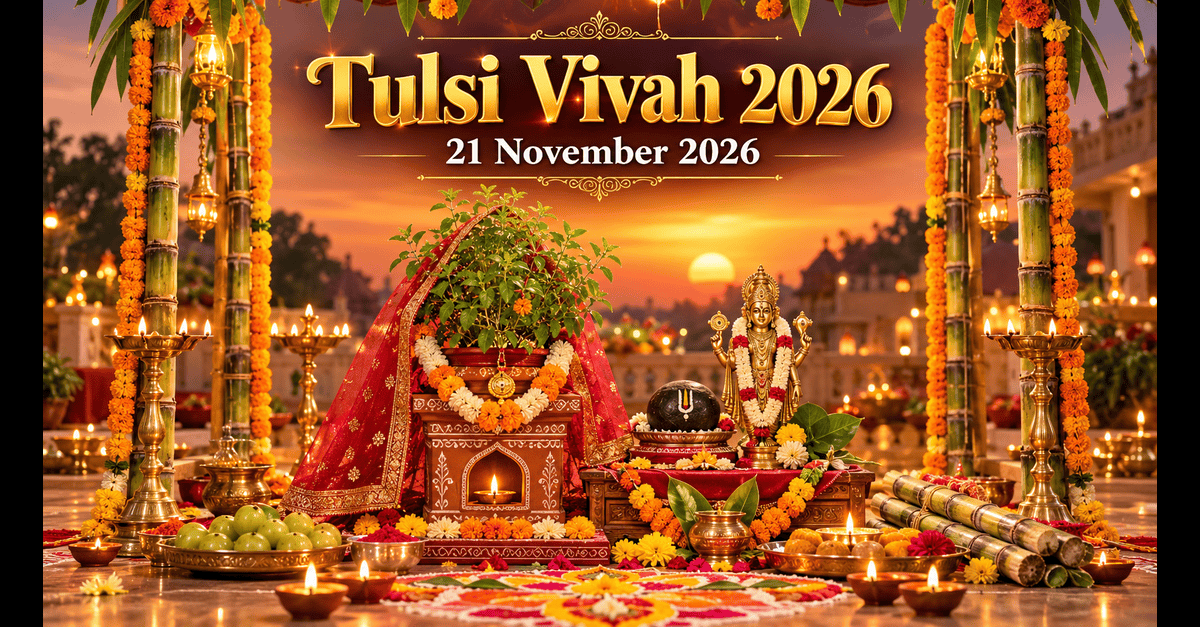
Tulsi Vivah is closely linked to this festival. In this ceremony, devotees symbolically marry the sacred Tulsi plant to Lord Vishnu, who is often worshipped in the form of Shaligram. Families decorate the Tulsi plant like a bride and prepare a small mandap with sugarcane, flowers, and colorful cloth.
Many households perform Tulsi Vivah on Ekadashi itself, while others perform it on Dwadashi or later in the Kartik month. Regardless of the day, the ritual symbolizes devotion, purity, and harmony in married life. In addition, it reminds people that nature and the divine are closely connected.
Dev Uthani Ekadashi Puja Vidhi
Although customs vary, you can follow this simple method at home:
- Wake up early and bathe. Wear clean clothes before starting your worship.
- Take a sankalp. Make a sincere resolve to observe the fast with devotion.
- Clean the puja space. Place an image or idol of Lord Vishnu on a clean platform.
- Offer worship. Present flowers, incense, a lamp, fruits, and fresh Tulsi leaves.
- Chant mantras. Recite “Om Namo Bhagavate Vasudevaya” or read the Vishnu Sahasranama.
- Perform the awakening ritual. Ring a bell or sing devotional songs to symbolically wake the Lord.
- Read the vrat katha. Listen to or read the story of Dev Uthani Ekadashi.
- Perform aarti. End the puja with aarti and distribute prasad.
Additionally, many devotees stay awake at night to sing bhajans and chant the Lord’s names. This practice, called jagran, adds to the spiritual atmosphere of the day.
Fasting Rules for Dev Uthani Ekadashi
Devotees observe the Ekadashi fast in different ways, depending on their health and tradition. Some keep a full fast without food or water. Others take only fruits, milk, nuts, and light foods. You can choose the method that suits you best.
Here are the common rules:
- Avoid rice, wheat, pulses, and grains.
- Skip onion, garlic, and non-vegetarian food.
- Avoid anger, gossip, and negative speech.
- Spend time in prayer, charity, and meditation.
- Break the fast only during the correct parana window.
Meanwhile, people who are elderly, pregnant, unwell, or taking regular medication should choose a lighter fast. Your health always comes first, and sincere devotion matters more than strict hardship.
What Is Parana and Why Does It Matter?
Parana means breaking the Ekadashi fast. Devotees do it on the following day, which is Dwadashi, within a specific time window. For Gauna Ekadashi in 2026, the parana time is 22 November, from 06:58 AM to 09:09 AM.
Traditionally, people avoid breaking the fast before the correct time begins. Likewise, they avoid delaying it beyond the window without reason. Once the time arrives, offer a prayer to Lord Vishnu first. After that, eat a simple, sattvic meal. Many devotees also donate food, clothes, or grains to the needy.
Furthermore, Kartik is considered a highly sacred month. Devotees light lamps, worship Tulsi, and perform charity throughout this period. Because Dev Uthani Ekadashi falls in this month, its blessings are believed to multiply.
Conclusion
Dev Uthani Ekadashi 2026 invites you to welcome light, hope, and new beginnings. Lord Vishnu awakens, Chaturmas ends, and the festive season returns with fresh energy. Whether you fast, perform Tulsi Vivah, or simply offer a prayer, you can make this day meaningful for yourself and your family.
So mark 20 and 21 November 2026 on your calendar. Then confirm your local tithi and parana timings, prepare your puja space, and observe the day with a pure heart. May Lord Vishnu bless you with peace, prosperity, and happiness.
For your Kundali or any astrology-related guidance, you can contact Astro Sarathi.
Astro Sarathi
Mobile No.: 91-9667557994
WhatsApp: +91-9858598765
We take pride in providing our valued clients with the best spiritual solutions and an excellent service experience.
Our services include:
 ऑनलाइन पूजा (Online Puja)
यंत्र एवं कवच (Yantras & Kavach)
कुंडली विश्लेषण (Kundali Vishleshan)
वास्तु शास्त्र परामर्श (Vastu Shastra Consultations)
रत्न (Gemstones)
रुद्राक्ष (Rudraksha)